Categoría: Uncategorized (Page 3 of 20)

“You have given entity and importance to those who were invisible”

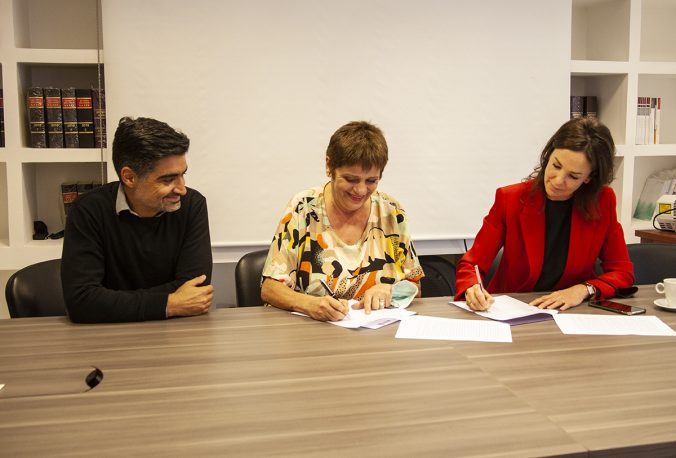
An agreement was recently signed between ACIFAD, CWS and the Public Prosecutor’s Office of the City of Buenos Aires (Argentina) to ensure the guarantees of children and adolescents who have adult references deprived of liberty (NNAPES ) in legal and judicial proceedings involving their relatives.

In 2016, during the production of the documentary Desinvisibilizar, one of the protagonists commented after finishing the interview: “I share my story with you, but I hope this helps something happen.”

That sentence resonated with those who heard it and it became, like many other things that children and adolescents who have adult deprived of liberty (NNAPES) have said, into an “objective to follow”. , that something happens….

Today, years later, and thanks to the work carried out jointly with ACIFAD in local and national spaces, it could be said that “something happened” or is beginning to happen.

Since CWS began to support and lead actions to generate knowledge, visibility and influence on children and adolescents who have adult references deprived of liberty together with ACIFAD and the rest of the organizations that make up the NNAPES Platform , one of the main objectives was to get the issue incorporated into the agenda of decision makers and those in charge of protecting and ensuring the rights of children and adolescents in general.

The signing of the agreement between ACIFAD, CWS and the Public Prosecutor’s Office of the City of Buenos Aires (Argentina), on March 21, is a great step in this search, since the Public Prosecutor’s Office (MPT) has as its mission “the control of legality of procedures, promotion of access to justice and respect, protection, promotion and satisfaction of the rights and guarantees of girls, boys and adolescents (NNA) and people who require support for their mental health “of the City from Buenos Aires.

Until now, the MPT focused mainly on protecting the rights of children and adolescents who were victims, witnesses or those who came into conflict with the law. Now, this organization also included the issue “NNAPES” as an axis on its agenda. Before, these cases were dealt with, but only in particular situations in which someone referred them to the agency.

In this process, the support of Dr. Noris Pignata, Tutelary Adviser before the Chamber of Appeals for Criminal, Juvenile Criminal, Misdemeanor and Offenses of the MPT, was crucial. She helped make this happen with the conviction that: “If a State makes a legitimate decision, but that causes damage to third parties who are not those directly involved, the State must take all precautions or precautions so that this impact, in this case, in the children of the people who are deprived of their liberty, be the smallest possible…”

In relation to what it means for the MPT to take the issue as a strategic axis, she commented: “This means that all MPT consultancies are going to have to have a general criterion of action in all these cases and in all instances.” Then he added: “This criterion may have steps to follow, such as: identifying the children, understanding the situations, making proposals in the process, articulating actions with other non-judicial agencies of the State (from the City of Buenos Aires) so that all the rights of these children and adolescents are not violated and/or are guaranteed and/or, if necessary, initiate judicial actions such as protection for housing, educational scholarships or similar matters”.

Added to the above, the idea is also to begin to ensure the rights of these children during the process of execution of the adult sentence; so that your best interest and your opinions are taken into account. “This is something that, in general, does not happen and that little by little we will try to change, since unfortunately, in many cases, the principle of the “non-transcendence of the sentence” is not followed.

Beyond attending to particular cases and accompanying these processes, the idea is that other activities are carried out based on the agreement, among which the generation of knowledge and statistics on the subject stand out, in coordination with other actors (judicial and non-judicial). , the sensitization and training of community workers, police personnel and other professionals (teachers, for example) who work with these children and the coordination of actors with other organizations of civil society and the State in the country.

In this sense, Dr. Pignata mentioned that for her what is interesting is: “that the issue be mainstreamed within the MPT and that not only those who work in the judicial system attend to the matter, but also that the multidisciplinary teams that work in the field with other issues of access to law and in articulation with an infinity of actors from different jurisdictions, also have it as a priority”.

Finally, he highlighted the importance and relevance that the work of CWS, together with ACIFAD and the NNAPES Platform, has had in recent years: “You have given entity and importance to those who were invisible,” he said, “you have developed a general view and if you like, regional view of the issue and its impacts, which is very different from me seeing it alone in a case and presenting it that way. Because we look at it from within the criminal process, but you see how these judicial processes have an impact on the lives of these children and adolescents who, until now, have never been heard. You have put them, and their families, in a place of equals”.

Last week the first work meeting was held within the framework of the project, which is expected to reach, accompany and support all the NNAPES who live in the City of Buenos Aires and also serve as a model for other jurisdictions both in Argentina and in the region.

Source: CWS LAC / Author: Luciano Cadoni, CWS LAC Child Rights Protection Programs Officer.

Photos: MPT
“The collateral effects of the penalty are beginning to enter international organizations”

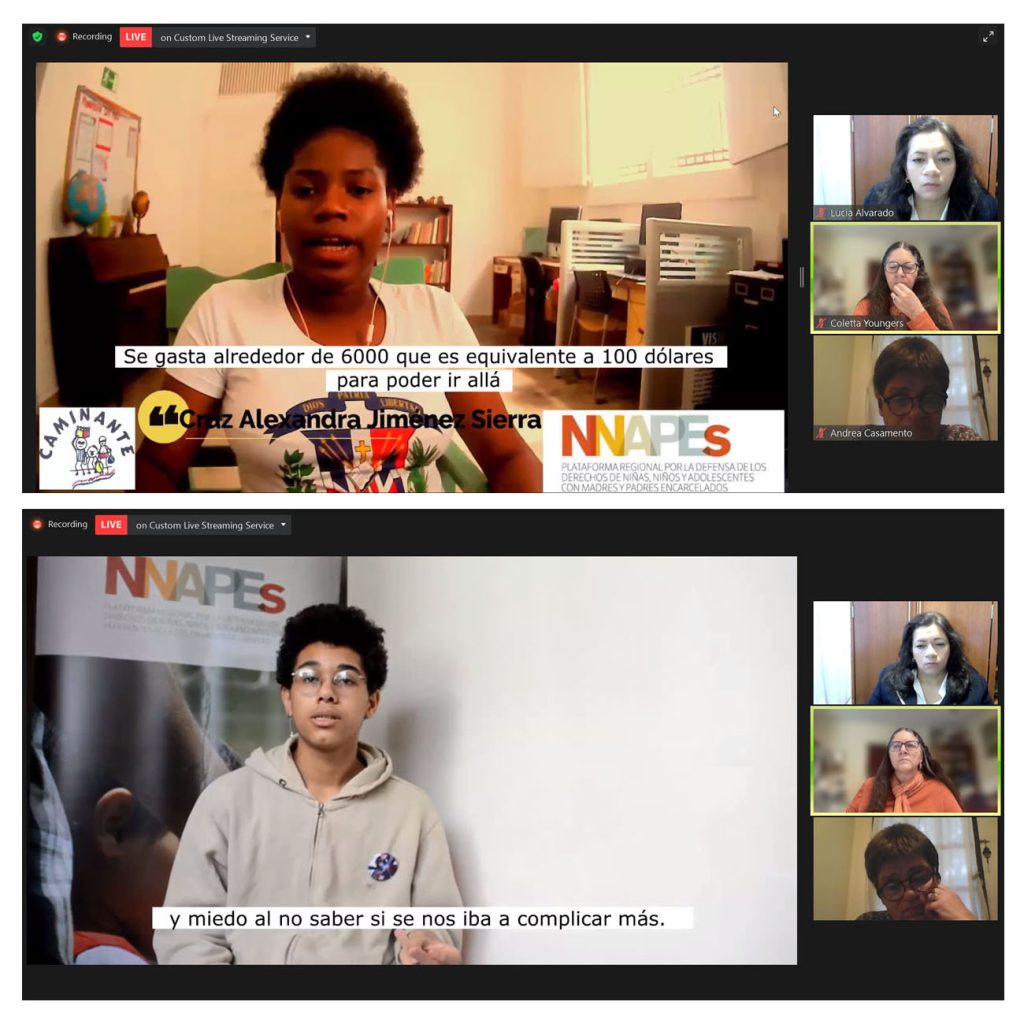
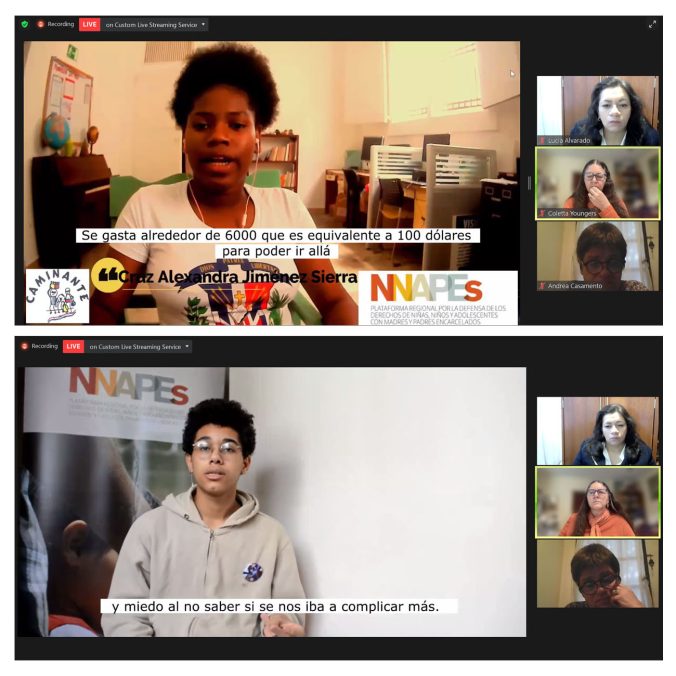
On behalf of the NNAPES Platform, adolescents Cruz Jiménez (Proyecto Caminante, Dominican Republic) and Manuel Fleitas (Gurises Unidos, Uruguay) participated in the forum Suffering in the Shadows: The Impact of Drug Imprisonment on Family Members .

The event was organized by the Washington Office on Latin America (WOLA), with the collaboration of ChurchWorld Service, the International Drug Policy Consortium, RIMUF, the Ministry of Foreign Affairs of Mexico and our NNAPES Platform.

The adolescents gave their testimonies about the change generated in their lives and in the lives of their family, having an adult reference deprived of liberty.

Cruz made recommendations to improve Dominican prisons, while Manuel told about the process to obtain his mother’s house arrest. This sentence marked an unprecedented event for Uruguayan jurisprudence and was possible thanks to the advocacy work of civil society together with the protection of the country’s social policies.

At present, the deprivation of liberty for crimes of micro-trafficking particularly affects women and their children, deepening the situation of vulnerability in which they already found themselves.

“Prison always transcends the family and those outside have to take charge. You have to work double to provide food to the person who is imprisoned, you have to have time to go to court and also how we accompany our children in this matter”, said Andrea Casamento, member of the Subcommittee for the Prevention of Torture of Nations United States, and also, director of ACIFAD and member of RIMUF.

Lucía Alvarado from CAIFAM (Mexico), also a member of the Red de Mujeres Familiares, expressed that the costs are high, since the families have to bring everything they need so that the relatives deprived of their liberty survive, in addition, they they experience situations of vulnerability when they are checked by prison staff. “Most of us are women, we are stigmatized and discriminated against, both by custody personnel and in the courts,” she remarked.

Along the same lines, Cruz commented that he would like prisons to improve, and that there would be metal and substance detectors so that no one has to go through the screening experience. The adolescent also made recommendations on the raids and the moment of detention of the relatives.

Regarding these issues, Casamento commented that being part of the Subcommittee for the Prevention of Torture has allowed him to introduce aspects that the body itself was not contemplating: “I tell them, ‘do you talk to the relatives in line?’ ‘Oh, we hadn’t met noticed’. The collateral effects of the penalty are beginning to enter international organizations. We have to take the voices to these organisms so that these problems are known”.

For his part, Manuel told about the process to obtain house arrest for his mother, in which the Best Interest of the Child was highlighted. “The separation was not only possible with my mother, but also with my brothers, since we did not know where we could end up,” Manuel said.

Regarding the house sentence, Colleta Youngers, Principal Advisor of WOLA, commented that “it can also be very limiting, since there are difficulties that women find themselves if they cannot carry out activities to support the family, if they cannot work, they it makes it difficult for them to be a mother” and urged to think beyond home measures.

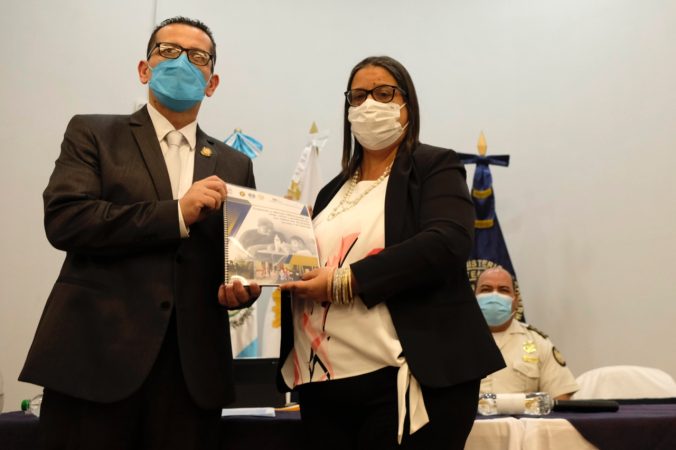
Guatemala: Colectivo Artesana, Penitentiary System and Police launch protection and care course for NNAPES

The purpose of the course called “Protection and Differentiated Care between children and adolescents with relatives deprived of liberty” is to provide care with a rights-based approach to children and adolescents from the Penitentiary System and the National Civil Police in the time of visits to prisons.

It is an initiative of the Colectivo Artesana with the support of Unicef ​​and the Swedish Embassy. “For us it is a great satisfaction, it has been 15 years of work and we are seeing how this process that we had already been working on is being institutionalized, but that it was possible to specify and advance through the sentence reached in the Court,” said Andrea Barrios, director of Colectivo Artesana at the launch of the course, adding that while civil society organizations can contribute, it is important that the State assume responsibility.

More than 600 officials of the Penitentiary System and the National Civil Police will be receiving the training, which will be virtual and will last 4 weeks, where topics such as the rights of children and adolescents and the implementation of sentences will be addressed.

Also participating in the event were the Director of the Penitentiary System, Luis Rodolfo Escobar; the Deputy Director of Studies and Doctrine, Juan Antonio Aguilar Alfaro; the Magistrate of the Supreme Court of Justice, María Eugenia Morales; and the Judge of First Instance for Children, Juan Orlando Calderón.

For his part, Escobar stated that “this training will contribute to the axis of prison transformation in favor of children and adolescents.” In turn, Alfaro indicated that the course will strengthen the capacities of Crime Prevention personnel to improve the treatment of children and adolescents who visit their relatives, as well as to give them decent treatment.

NNAPES indialogue with the Inter-American Court of Human Rights

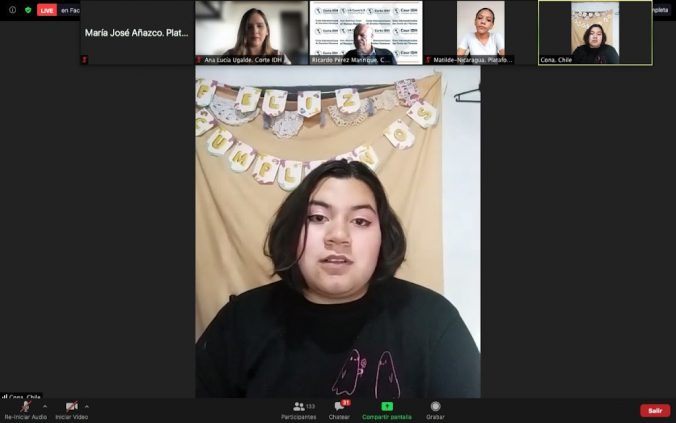
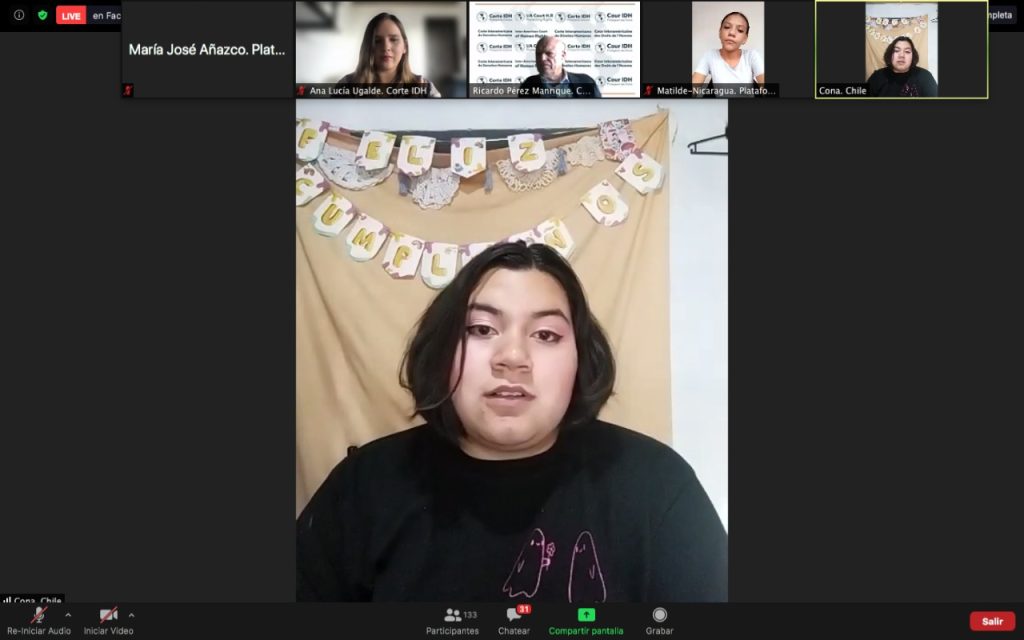
The Third Dialogue on Children and Adolescents + Inter-American Court of Human Rights (IDH) was held. It was an instance in which children and adolescents from the region spoke with the judges about different topics.

The event was organized by the Inter-American Court of Human Rights, Save the Children, Sweden Sverige and the Paniamor Foundation. It had the support of the NNAPES Platform, Rednnyas, Molacnats, Interdistrict Network of School Municipalities, Action for Children and Peace and Hope.

On this occasion, the central theme was to exchange on participation in the mechanisms of the Inter-American Court.

From the NNAPES Platform, Matilde Rautes (Nicaragua) and Constanza Silva (Chile) participated, who represented other children and adolescents with adult references deprived of liberty from Latin America and the Caribbean. The adolescents presented the Court with various recommendations to take into account in the participation process, taking into account the stage before, during and after the instance before the Court.

Regarding the previous stage, they mentioned the need to hold meetings prior to participation to discuss this instance and provide inputs for educators to accompany children and adolescents in this process. Also, the adolescents mentioned the importance of knowing the date and time of the events to be organized and that these do not interfere with their educational activities.

Matilde and Constanza also provided recommendations for organizations that work with children and adolescents. In this sense, they stressed the need to carry out a process of prior work and reflection with other children and adolescents. In addition, strengthen the use of technologies and have all the information about the event. On the other hand, they also referred to the possibility that children and adolescents have emotional support before, during and after the activity.

Regarding the instance during the participation, for the adolescents, they must be flexible and friendly instances, that have an active listening, that their participation is valued and that they are respected as subjects of law. Participations must also be organized so that children and adolescents are the first and that there are no long waits, Matilde and Constanza specified.

Regarding the post-participation stage, the adolescents urged that children and adolescents should be informed about the process that continues after the hearing, about what aspects are going to be taken into account and what the final result is.

Honduras: La organización CASM se incorpora a la Plataforma NNAPES 

Comisión de Acción Social Menonita (CASM) es una organización hondureña con 40 años y que trabaja fortaleciendo las capacidades de autogestión a familias y otras organizaciones, con el propósito de hacer frente a la injusticia social, económica, ambiental y política.

Según informó CASM, hasta 2020 se conoce que la población carcelaria de Honduras ascendía a 21670 y de este número 1222 eran mujeres. En el contexto de abordaje a las familias, CASM trabaja con numerosos niños, niñas y adolescentes con referentes adultos privados de libertad. En 2021, con apoyo de Church World Service y asistencia técnica de INPRHU, la organización trabajó en el proyecto Psique Arte, de atención a NNAPES de la ciudad de San Pedro Sula, la segunda ciudad en importancia en el país y en población, a través de una propuesta de investigación terapéutica para la asistencia de esta población.

Las comunidades que participaron en la propuesta fueron: Bordo Nueva Esperanza, Bordo Gavión, Bordo Bográn y Bordo Guadalupe. Allí se trabajó con adultos y niños, niñas y adolescentes con diferentes metodologías y técnicas terapéuticas en combinación con herramientas artísticas para fortalecer el desarrollo emocional, psicológico y familiar con el fin de afrontar el impacto del encarcelamiento.

La propuesta tuvo como propósito identificar y caracterizar a esta población, por lo cual también se aplicaron cuestionarios y entrevistas individuales, además de las instancias grupales de arteterapia. Entre los resultados, CASM identificó la necesidad de brindar herramientas de psicoeducación a NNAPES y familias sobre esta problemática. También se visualizó que es necesario sensibilizar y concientizar a familias, comunidades y estado. Desde la organización se manifestó además el desafío de aumentar el alcance de esta iniciativa a otras comunidades que cuentan con familiares privados de libertad.

Actualmente, CASM tiene alcance nacional, trabajando en varios puntos del territorio hondureño, particularmente en 14 de los 18 departamentos del país que incluye el Valle de Sula donde se encuentra San Pedro Sula una de las ciudades más grandes del país, el occidente y el litoral Atlántico, zonas donde hay una gran diversidad étnica y altos índices de pobreza y exclusión social.

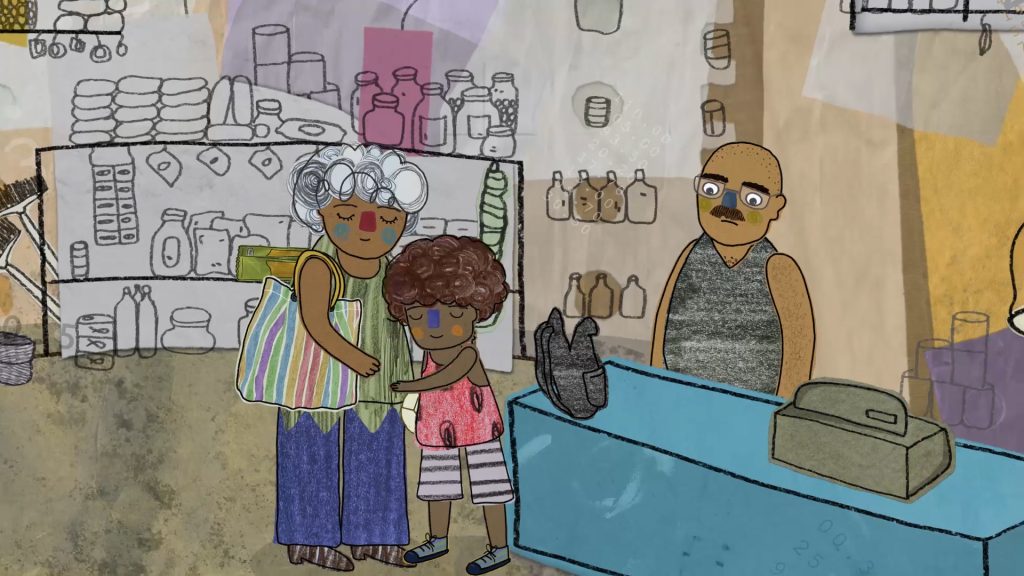
Plataforma NNAPES lanza la serie animada Abrazos, que narra experiencias de infancias y adolescencias con familiares privados de libertad

Se trata de una serie de cuatro capítulos realizada junto al canal argentino Pakapaka que contó con la participación de niños, niñas y adolescentes con referentes familiares privados de libertad.
 
Cada uno de los episodios se centra en una situación que estos niños, niñas y adolescentes experimentan en algún momento durante el encarcelamiento de un familiar: asumir roles adultos, ir a visitar al familiar a un centro de detención y lo que eso implica, o ser objeto de discriminación y estigma en los centros educativos y/o en sus barrios. 

“En cada video sentí que tenía un poquito de mi”, comentaron varios de las/os adolescentes y jóvenes que participaron en la presentación regional de la serie: “Cuentan lo que pasamos y no nos está denigrando, expresan lo que muchos sentimos y no podemos expresarlo”. Manuel, Estefanny, Felicia y Cris emocionaron a todos y todas con sus percepciones acerca de los episodios. 

En el proceso creativo y en las voces participaron niños, niñas y adolescentes con referentes adultos privados de libertad. “Esta serie se hizo con mucho amor y con mucho respeto, nos entusiasma mucho el trabajo final, pero mucho más el proceso”, comentó Cielo Salviolo, Directora de Pakapaka.

“Estamos súper felices, porque el objetivo fundamental es darle visibilidad a la realidad que viven 2.5 millones de niños, niñas y adolescentes en América Latina y el Caribe”, señaló Lía Fernández desde la Secretaría Ejecutiva de la Plataforma NNAPES.

Además, los cortometrajes están acompañados por una guía de actividades para madres, padres, educadores/as, docentes y todos/as quienes quieran abordar la temática con niñas, niños y adolescentes. 
 
Este proyecto fue elaborado con la realización de INAUTA, gracias al apoyo de Open Society Foundations y de Church World Service

« Older posts Newer posts »

© 2026 NNAPEs

Theme by Anders NorenUp ↑