Author: NNAPEs (Page 1 of 2)

Marta Santos Pais: “The children with incarcerated parents are the most invisible group in public policies”

At the last UN General Assembly, Marta Santos Pais, Special Representative of the Secretary-General on Violence against Children (SRSG), presented the preliminary findings of “Las voces de niñas, niños y adolescentes con referentes adultos privados de libertad” (The voices of children and adolescents with incarcerated parents)”. This was a regional research effort carried out last year in partnership with Plataforma NNAPES.
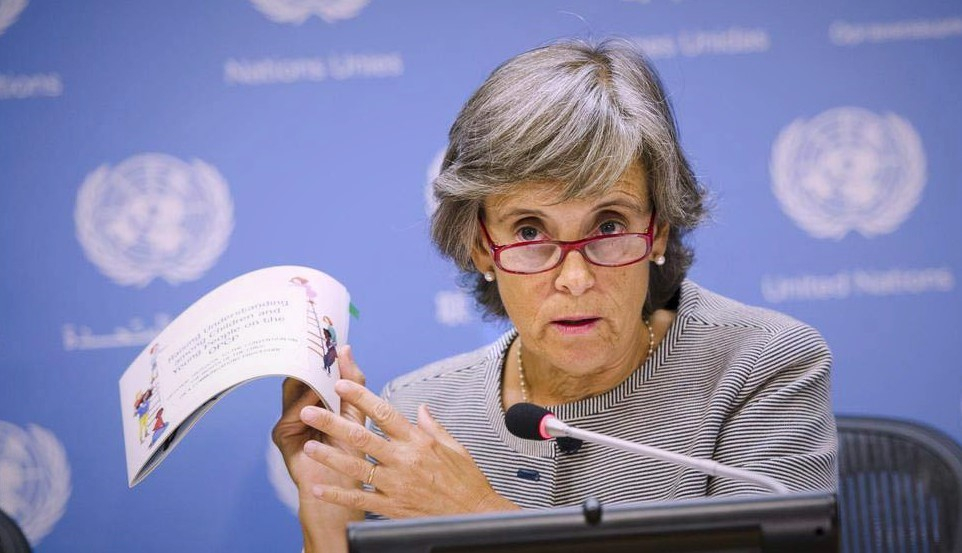
Marta Santos Pais

During her presentation she highlighted that: “These children have the right to visit their incarcerated parents in secure and respectful places.” She then added, “For these children; fear, insecurity and lack of access to support services are very high concerns. Children are often bullied at school because a relative is in prison”.

This research is a contribution to the Global Study on Children Deprived of Liberty . It was produced with the aim of making the situations that these children face visible through the collection of qualitative information collected in 8 countries from the LAC region: Argentina, Brazil, Chile, México, Nicaragua, Panama, Dominican Republic and Uruguay.

What do the voices of children and adolescents in reference to their incarcerated parents say?
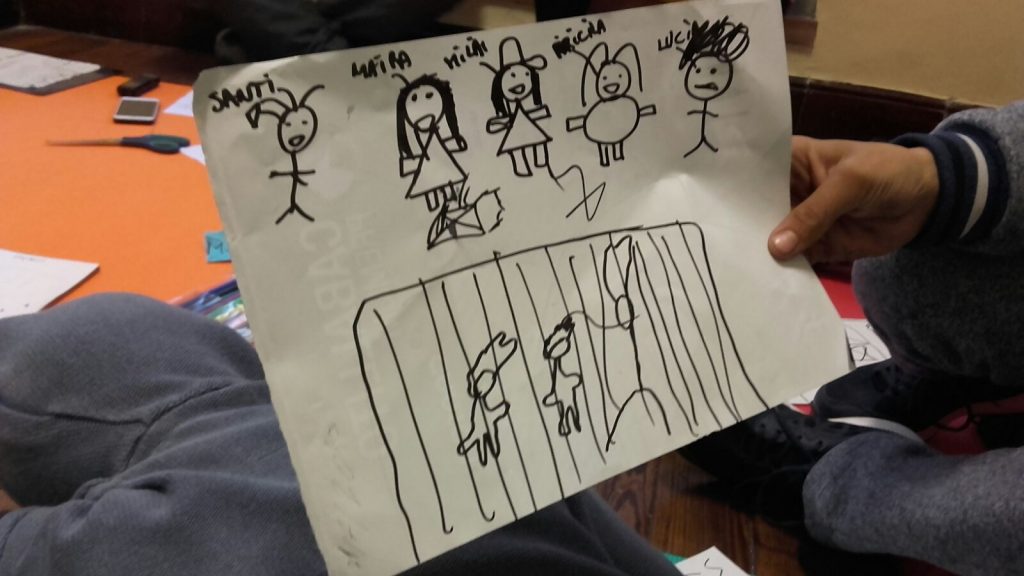
Dibujo

The study shows that the majority of these children live in vulnerable situations that worsen when their father or mother is incarcerated.

The study highlights the deprivation of liberty that the adult creates negative consequences in every aspect of the child’s life. Some of the many consequences are stigma and social condemnation. For instance, a Mexican adolescent stated “At school, people don’t like you and say: “Oh, your relative is in the prison. They begin to say stuff about you as if you are a criminal yourself.”

The negative impacts on family life are due to changes in the care of the children as well as the changes in the family’s financial situation. The Mexican adolescent states that her family changed a lot when her stepfather was arrested. “My mother wasn’t eating, she wasn’t doing the things she normally did and she wasn’t going to work. She used to get home at 1 or 2 am so no one was there to take care of my little brother.” As presented the child must adapt to the changes in his/her life and take on adult roles.

These children also often face violent situations and thus are forced to start working to provide an income for the family. They are at a higher risk of sexual exploitation and could end up living on the streets.

Another common consequence is the emotional impact on the child. The study highlights that sadness, pain, fear, shame, hatred and anger are amongst the most common feelings.

The situations that are experienced by these children and adolescents can also increase the school dropout rate.The education system in general, isn’t able to provide the support that the child may need to continue with their education. “I didn’t go to school until my mother and father came out of prison.” said a Nicaraguan child.

Lastly, the children and adolescents that participated in the study recommended the following: :

  • Encourage the creation of conversation and open dialogue spaces for children with incarcerated parents.
  • Ensure psycho-affective and economic support to families.
  • Perform intersectional programs with a strong emphasis on the education system.
  • Protect the rights of the families to live with freedom from violence.
  • Plan actions for addiction prevention and treatment.
  • Implement changes in the way arrests and police home invasions occur.
  • Reform the penal system, improve the quality of the visits and allow for a longer time period for visits in the penitentiary centers.

The Inter American Institute of the Child (IIN) of the Organization of American States (OAS) and the Plataforma NNAPES conducted the first pilot training course on Children with Incarcerated Parents for State officials in the Americas.

One of the highlights of the work of Plataforma NNAPEs during 2020 was the launch of the course “Promotion and comprehensive protection of children and youth with incarcerated parents” (CIP from now on). The course was designed based on the contents and  the recommendations of the homonymous publication produced and presented by both institutions in 2019. This, first of its kind course, targeted operators of the children protection systems, as well as professionals working in the justice and penitentiary systems in the different countries.

32 professionals from 11 countries (Argentina, Chile, Colombia, Costa Rica, Ecuador, Guatemala, Honduras, México, Nicaragua, Paraguay and Uruguay) finished the 7-weeks pilot online training that is now part of the Institute´s Inter American Training Program.

The objective of the course was to present the specific challenges and needs that usually CIP in the region face and to identify actions that can help to promote and protect their rights.

The course was officially launched with a webinarthat counted with the participation of Víctor Giorgi, IIN-OAS´s General Director; Gonzalo Salles, from the Plataforma´s Executive Secretariat; Edith Avendaño, a youth representative from Nicaragua; Ricardo Pérez Manrique, a Judge of the Inter-American Court of Human Rights; and Luis Pedernera, President of the United Nations Committee on the Rights of the Child.

The recording of the discussion is available here(only in Spanish).

It is expected that during 2021 two more editions in Spanish will be organized and that the contents will be translated to English so the first edition for anglophone speakers can take place during the last semester of the year.


Source consulted: IIN-OEA


“Children and adolescents deprived of liberty or with incarcerated parents are among the most marginalized in the world”

This statement is included in the document entitled Children speak about the impact of deprivation of liberty: the case of Latin America, which gathers information on children and adolescents deprived of liberty and on those who have incarcerated parents, and explores the intersection between two realities intrinsically linked by violence. 
This is report is result of an alliance between the United Nations Office of the Special Representative of the Secretary General on Violence against Children, the NNAPES Platform, UNICEF, the governments of Paraguay and Uruguay, and the organization Gurises Unidos.
The work was carried out between 2017 and 2018 when consultations were held with a total of 504 children and adolescents who were either deprived of liberty or had a parent deprived of liberty. 
Children and adolescents with incarcerated parents (NNAPES, for its initials in Spanish), between 6 to 17 years old, from Argentina, Brazil, Chile, Guatemala, Mexico, Nicaragua, Panama, Paraguay, Dominican Republic and Uruguay, were consulted for this report.

“Children deprived of liberty or with incarcerated parents are among the most marginalized in the world, living a life marked by violence and fear and seeing their rights systematically trampled on,” says the report and notes that the lives of the children and adolescents from both groups are conditioned by the lack of adequate parental support and by violence, fear, insecurity and social exclusion. “Deprivation of liberty is intrinsically linked to the cycle of violence. The recourse to violence is present in their life history, in their families, at the time of arrest and throughout the entire period of imprisonment”, the document added.


Invisible children
“When your parents are in jail, who is going to help you?”, says a Chilean teenager who was part of the consultation. Another teenager from Uruguay shared a similar feeling: “We are people, but for society it is as if we did not exist.” The incarceration of a family member has negative effects on the family environment, impacting on the economy and on the care of children. In most cases, it is the children and adolescents themselves who have to assume adult roles, abandoning formal education and carrying out child labor activities, and are often exposed to street life, situations of violence, abuse and exploitation.

Added to this, there is an impact on a psychological and emotional level, as well as the stigmatization they sometimes suffer. Among the findings, the study indicates that many children and adolescents deprived of liberty also have a father or relative in prison. In Uruguay, this situation was identified in 67% of cases.

The report affirms that this data shows the pernicious cycle that can trigger the entry to the justice system in childhood and this is one of the powerful reasons why it is urgent to adopt preventive measures and apply the principle of remission for juvenile offenders. In this sense, the document makes a series of recommendations to the States that focus on the protection of children and adolescents regarding?? the penal system, in the establishment of supervision and surveillance mechanisms, in the training of personnel, in promoting data systematization and analysis, and in collaboration with local actors, civil society and the business sector.

Lastly, a greater investment in children and adolescents is suggested, a recommendation that is aligned with the United Nations 2030 Sustainable Development Goals.

“You have the possibility to make other children not suffer what we suffered”

In August the third general assembly (GA) of Plataforma NAPPES was organized in Santo Domingo, Dominican Republic. The GA created for the first time an environment where youth participants from Nicarágua, Argentina, Chile and Dominican Republic shared their experiences.

The event was organized in conjunction with the The National Council of Childhood and Adolescence of the Dominican Republic (CONANI). During the event, the youth shared their personal experiences with all the event participants (representatives and authorities from childhood organizations, members of the penal system, members of the judicial system, etc.) and their testimonies clearly showed the profound impact the arrest of a loved on has had on their lives.

Catalina, 17 years old, from Chile, testimony is a clear illustration of this.

During the first days, each of the member organizations presented their work and collaborated on the 2018 Plan of Action. Throughout the sessions the youth participated and shared their experiences. As well as participated in the production of Manifesto proposals to increase the awareness of children and adolescents with incarcerated parents.

The impact of their presentation made Alberto Padilla, the CONANI representative, commit to include the NNAPES theme in the work they are doing in the Dominican Republic, to protect children from violence.

Chile, Guatemala and Panama work together to protect the rights of NNAPES

The Chilean organization Enmarcha in partnership with Gendarmerie and the Ministry of Social Development of the country, carried out different work days in Panama and Guatemala, with the National Network of Support for Children and Adolescents   (Rednaniap) and Colectivo Artesana. The groups shared their experience in defending the rights of children and adolescents with relatives deprived of their liberty.

According to what was said by Francisca Hidalgo, director of Enmarcha, whose efforts are supported by the Chile Fund, which “seeks to support civil society organizations in Panama and Guatemala that are working in the line of promotion and protection of the rights of children who have a family member deprived of their liberty, also contributing to strengthen alliances between the State and Civil Society”.

Authoritative figures from Guatemala and Panama were present at the event. The website also mentions that this initiative seeks to generate inclusion of the most vulnerable sectors, as well as the elimination of all forms of discrimination, and create greater social justice. Since the reality impacts the children with relatives deprived of freedom violate their rights of childhood.

In addition to this regional activity, Enmarcha carried out the traveling museum Envisibles: Voices of childhood, prison and community. “The museum seeks to raise awareness of the violations of rights that these children live in, a reality that remains invisible to society in general.” said Francisca Hidalgo, Executive Director of the NGO, to the Chilean press.

It is worth noting that in Chile there are more than 40,000 children and adolescents with relatives deprived of freedom. About 120 of those children are under the age of two years old, living in detention centers with their mothers.

Reference source: Enmarcha.cl

Argentina implements actions for Children of Incarcerated Parents

Photo: Tedx Río de La Plata

ACIFAD and CWS  presented a series of interactive visuals throughout the conference. The first visual, was the presentation of the documentary Desinvisibilizar, (English subtitles coming soon) which provided an in depth look into the situation of children and adolescents with incarcerated parents.

The documentary Desinvisibilizar explores the reality of approximately 140,000 children and adolescents whose parents are deprived of liberty in Argentina. The documentary examines their lives, expectations, fears and desires while highlighting the need for supportive public policies.

Another focal point of the meeting, was the presentation of Andrea Casamento, President of ACIFAD, at TEDx Rio de la Plata. The event took place in Buenos Aires, last October and was attended by around 20,000 people. It was a excellent opportunity for Ms. Casamento to be able to explain the effects of prison on the lives of families as a whole. Her presentation already has almost 6,000 views on YouTube. Beyond this, ACIFAD and CWS have also made several specific actions related to the subject.

At the community level, a pilot project was created in an educational center in the Ciudad Oculta (Villa 15 – Buenos Aires), supported by the Navarro Viola Foundation and the platform NNAPEs. Teachers were trained and different awareness actions were carried out with people in the community. As a result, many families began to approach the Center to ask for advice and support about the issue while teachers began to respond.

After the documentary Desinvisibilizar was screened, at the University Center of the Penitentiary Complex in the City of Buenos Aires (Devoto), a group of parents deprived of liberty requested creating a series of activities and workshops on fatherhood . The workshop was formed and children were able to share a special day of games and activities with their parents and families.

CWS and ACIFAD coordinated the annual meeting of family victims of institutional violence organized by the Provincial Commission for Memory (CPM). It empowered the young people that participated in the event.

Photo: Julia Lurag

The meeting brought together about 500 people from 18 provinces in Argentina, who shared their experiences and proposals against violence exerted by security agencies, the prison service and justice systems.

During the event, a group of children and young people participated in various sports and cultural activities. There was also a time for reflection as well as time to share the challenges they face for having a family member deprived of freedom. One of the things that became clear, is that there are no safe and reliable spaces where they can talk about this.The group of children who have similar experiences, “Chapa” is the only place where they can talk, because “they are calm and all in the same situation”.

The goal of the meetings in Argentina, is to continue the conversation during 2018 while spreading awareness and strengthening initiatives about the issue.

« Older posts

© 2025 NNAPEs

Theme by Anders NorenUp ↑